
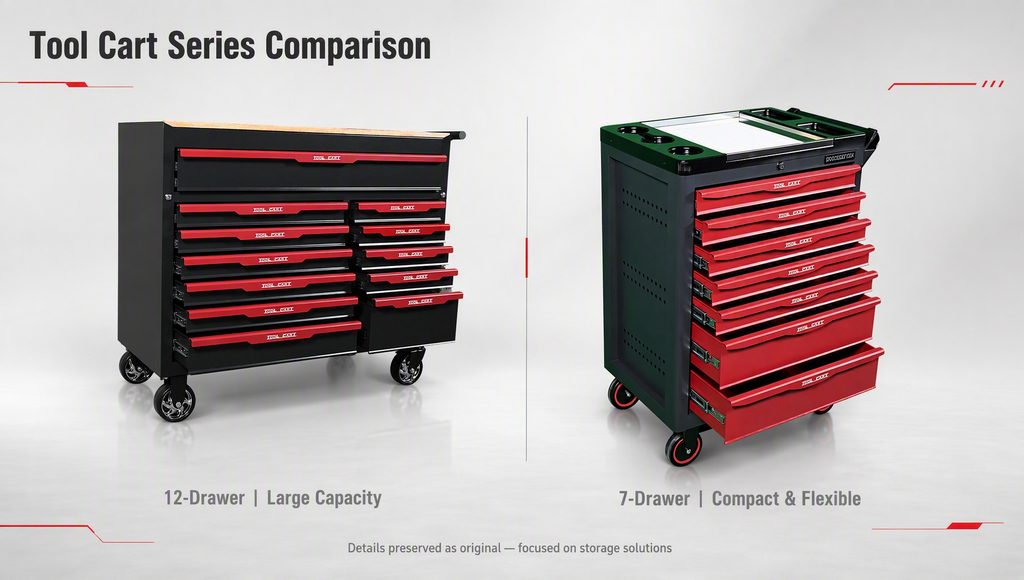
Choosing between a 7 drawer tool cart and a 12 drawer tool cart is one of the most common questions we hear from buyers — from DIY homeowners setting up their first garage to professional repair shops upgrading their equipment. Pick too small, and you’ll run out of space within months. Pick too big, and you waste money and floor space. This guide breaks down the differences so you can decide in minutes.
Why the Right Tool Cart Size Matters
A tool cart is not just storage — it’s your workflow. If your cart is overcrowded, tools end up on the workbench, on the floor, or lost in drawers. If it’s oversized, you’re paying for empty space and giving up valuable garage room.
Most buyers who regret their purchase made one of two mistakes: they bought for the tools they own today, or they assumed “more drawers = better.” Both lead to wasted money. Getting the size right the first time saves you a second purchase and keeps every tool within arm’s reach.
7 Drawer vs 12 Drawer Tool Cart: A Quick Comparison
The 7 Drawer Tool Cart: Compact and Practical
A typical 7 drawer tool cart is around 26–28 inches wide, with a mix of shallow drawers for sockets and hand tools plus one or two deeper drawers for power tools.
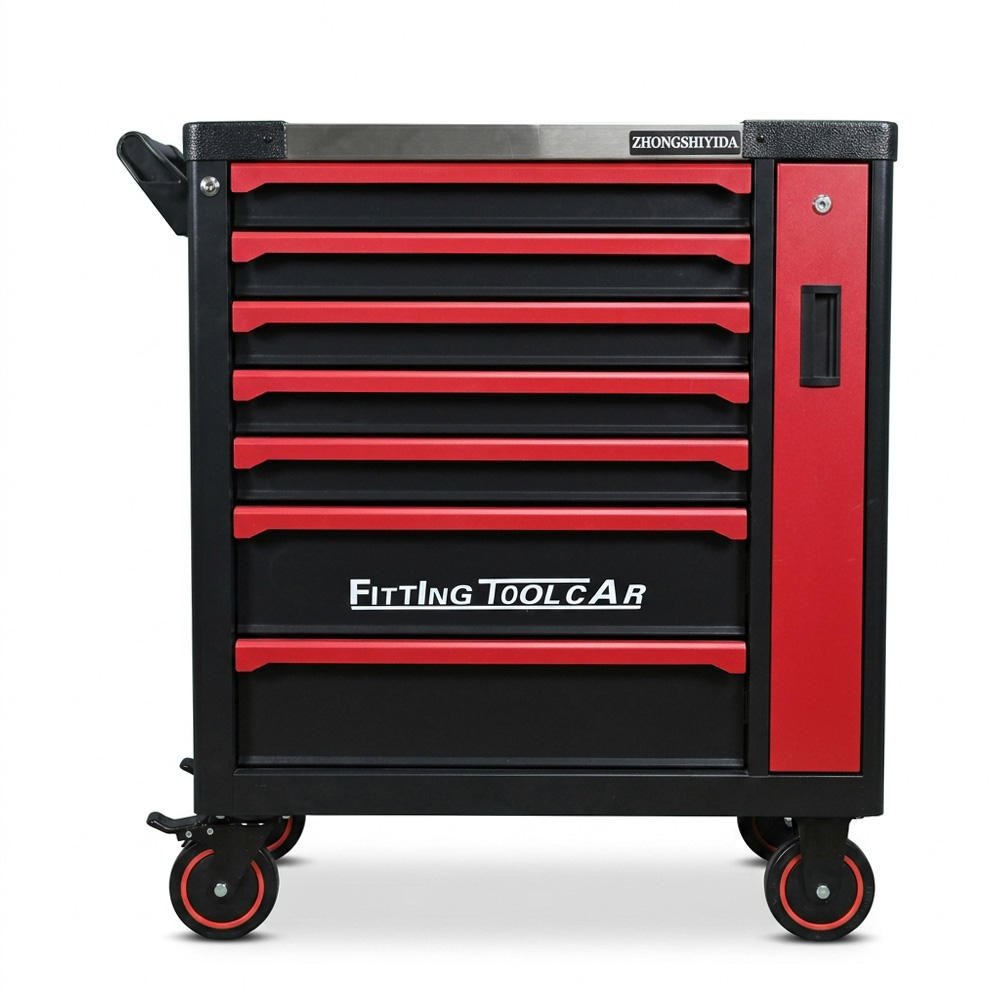
- Fits tight spaces — ideal for home garages and small workshops
- Easier to move — lighter overall weight, smoother handling
- Lower investment — a practical entry point for first-time buyers
- Enough capacity for most DIY users — comfortably organizes 100–200 tools
- The trade-off: oversized items like long torque wrenches or large pneumatic tools can be a squeeze.
The 12 Drawer Tool Cart: Built for Heavy-Duty Work
A 12 drawer tool cart usually measures 41–55 inches wide, offering finer drawer division, more deep drawers, and a larger top work surface.
- Much higher capacity — separates every tool category clearly
- Higher total load rating — built for daily professional use
- Wider worktop — doubles as a real work surface
- Better for teams — multiple technicians can find tools fast
- The trade-off: a bigger footprint, a higher price, and more space needed for movement.

Side-by-Side Comparison
| Feature | 7 Drawer Tool Cart | 12 Drawer Tool Cart |
| Typical width | 26–28 in (66–71 cm) | 41–55 in (104–140 cm) |
| Drawer layout | Mixed shallow + 1–2 deep | Many shallow + multiple deep |
| Total load capacity (typical) | 500–800 lbs | 1,000–1,800 lbs |
| Footprint | Compact | Large |
| Best for | DIY, home garage, light repair | Professional mechanics, auto shops |
| Price level | Lower | Higher |
6 Key Factors to Consider Before You Buy
Whichever size you choose, check these specs before ordering:
1. Load capacity — Look at both total capacity and per-drawer rating. Quality ball-bearing slides typically support 100–150 lbs per drawer.
2. Material and steel thickness — Cold-rolled steel is the standard; panel thickness of 0.8–1.2 mm is common. Thicker steel means less drawer flex and longer life.
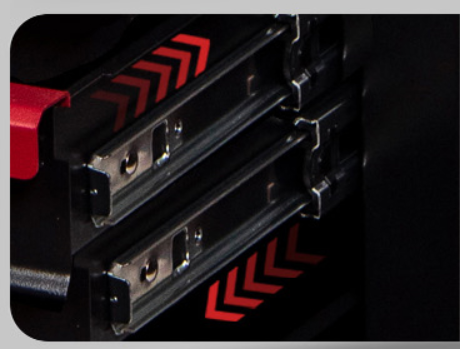
3. Drawer slides — Full-extension ball-bearing slides let you reach tools at the very back. Avoid cheap friction slides.
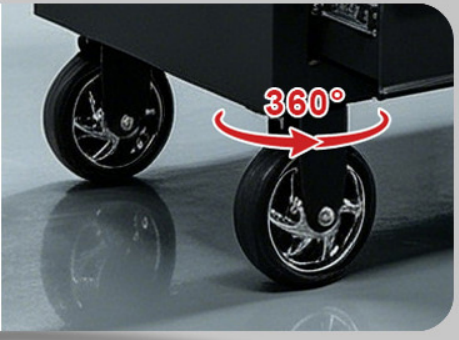
4. Wheels (casters) — At least two locking casters, preferably 4–5 inch PU wheels that protect floors and roll smoothly under load.
5. Locking system — A single-key system that locks all drawers at once keeps your tools secure.
6. Surface finish — Powder coating resists rust, oil and scratches far better than ordinary paint.

Common Mistakes to Avoid
1. Buying for today, not next year. Your tool collection will grow — leave 20–30% free space.
2.Ignoring drawer depth mix. A cart full of shallow drawers can’t hold power tools or long wrenches.
3. Chasing drawer count over usable space. Twelve cramped drawers are less practical than seven well-proportioned ones. Layout matters more than the number.
4. Overlooking wheel quality. A loaded cart with poor casters is hard to move and can damage floors.
Which One Should You Choose?
1. Home garage / DIY user: Choose a 7 drawer tool cart. It covers about 80% of everyday needs at a friendly price, and you can always add a second cart later.
2. Professional mechanic / busy repair shop: Choose a 12 drawer tool cart. Daily heavy use, more tool categories and team access justify the investment.
3. Mobile service technician: Measure your van space first — a 7 drawer cart usually fits better.
4. Distributors and retailers: Stock both sizes. The 7 drawer model pulls in entry-level buyers; the 12 drawer model serves professional customers with higher margins.
Bottom line: if you’re still unsure, start with a 7 drawer tool cart — it’s the safer first purchase for most buyers, and upgrading later is easy.
Ready to Source Tool Carts?
We are a professional tool cart and tool cabinet manufacturer based in China, supporting OEM/ODM, wholesale and full customization — drawer layouts, colors, sizes and logos. Contact us today for a free quote and product catalog, or browse our tool cart collection.
Frequently Asked Questions
Q1: Is a 7 drawer tool cart enough for a home garage?
Yes. For most DIY users, a 7 drawer tool cart comfortably holds sockets, wrenches, screwdrivers and a few power tools. If you also store large diagnostic or pneumatic equipment, consider adding a wall cabinet or a second cart.
Q2: Can a 12 drawer tool cart handle heavy tools?
Absolutely — that’s what it’s built for. With higher total load capacity and more deep-drawer options, a 12 drawer cart easily carries torque wrench sets, air tools and heavy jacks. Just confirm the per-drawer load rating with your supplier.
Q3: Can I customize the drawer layout, color and my logo?
Yes. As a factory-direct manufacturer, we support full OEM/ODM customization — drawer configurations, steel thickness, powder-coated colors and your branded logo.
Q4: What is your minimum order quantity (MOQ)?
Our standard MOQ is 50 units. First-time buyers can also start with a 1-unit trial order at a slightly adjusted unit price to test quality before scaling up.