
A disorganized garage costs your time, money, and frustration — every time you dig through a pile of tools to find the right socket, or tip over an overloaded cart that can’t handle the weight. Whether you’re stocking your own workshop or sourcing tool carts for your distribution business, making the right choice upfront prevents years of headaches. As a professional tool cart and tool cabinet manufacturer based in China, we’ve helped hundreds of distributors and OEM buyers match the right product to the right market. Here’s what matters most.
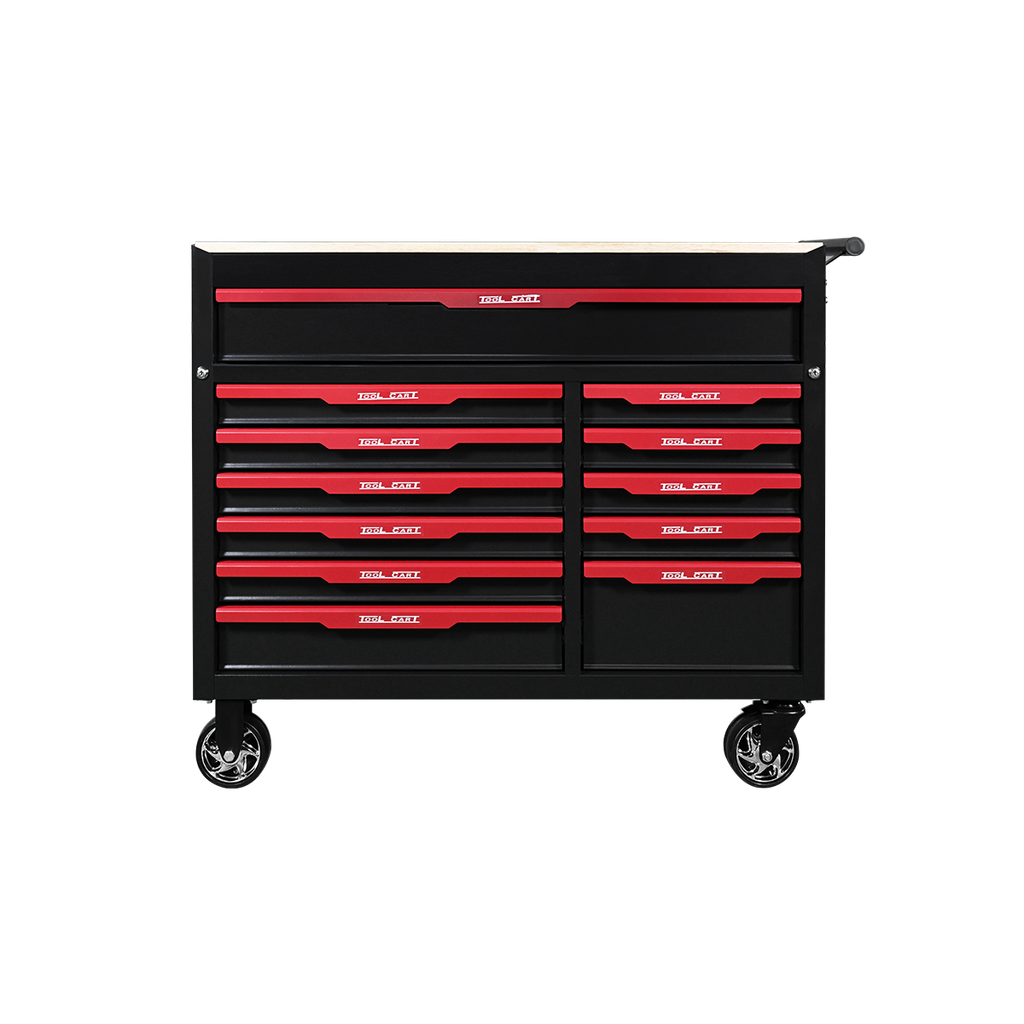
5 Key Factors to Evaluate Before Buying a Tool Cart
1. Load Capacity — Match the Cart to the Tools It Will Hold
Load capacity is the single most important specification. Under-rated carts bend, warp, and fail. Over-rated carts cost more than necessary. Here’s how to think about it:
• Light-duty (up to 150 kg) — Suitable for basic hand tools, screwdrivers, and small parts. Ideal for home garages and light maintenance work.
• Medium-duty (150–300 kg) — Handles a full set of mechanic’s tools, including ratchets, wrenches, pliers, and diagnostic equipment. This is the sweet spot for most auto repair shops.
• Heavy-duty (300–500+ kg) — Built for industrial environments with large power tools, heavy socket sets, and specialty equipment. Required for professional workshops and fleet maintenance facilities.
When evaluating load capacity, consider both the total capacity and the per-drawer limit. A cart rated for 400 kg total might only support 30 kg per drawer — which matters if your users load individual drawers with dense metal tools.
2. Material and Construction Quality
The material determines everything — strength, weight, durability, and corrosion resistance. Here’s what to prioritize:
Steel Type
• Cold rolled steel (SPCC) — The gold standard for professional tool carts. Strong, smooth, and ideal for powder coating. We cover this topic in detail in our cold rolled steel guide.
• Mild steel — Acceptable for budget product lines but less durable over time.
Construction Details
• Welded frame vs. riveted — Welded frames are rigid and long-lasting; riveted construction is lighter but less robust
• Drawer slide type — Ball-bearing slides rated for full extension under load are essential
• Reinforced corners and joints — Critical stress points that determine structural longevity
3. Drawer Configuration — Match the Layout to the Workflow
The right drawer configuration depends on the user’s work style and tool inventory:
• Shallow drawers (top 2–3) — Ideal for small tools, sockets, and frequently used items. Keeps things visible and accessible.
• Medium drawers (middle section) — Perfect for wrench sets, pliers, and mid-size tools.
• Deep drawers (bottom 1–2) — Best for bulky items, power tools, or specialty equipment.
Common Configurations
| Configuration | Best For | Typical Drawer Count |
| 3-drawer cart | Light use, portability | 3 |
| 5-drawer cart | General automotive work | 5 |
| 7-drawer cart | Full mechanic setup | 7 |
| 7-drawer + cabinet combo | Professional workshop | 7 + side cabinet |
| Rolling toolbox + top chest | Maximum storage | 6–10 total |
4. Caster Quality — The Unsung Hero of Tool Cart Design
Casters are the most common failure point on cheap tool carts. A cart with excellent drawers and frame is useless if the wheels break within months.
What to Look For
1. Wheel diameter — Larger wheels (125–200 mm) roll more easily over debris, oil spills, and uneven floors
2. Material — Polyurethane wheels offer the best combination of floor protection, load capacity, and noise reduction. Rubber wheels are quieter but wear faster. Nylon wheels handle the heaviest loads but can mark floors.
3. Bearings — Sealed ball bearings in the caster swivel head ensure smooth steering even under full load
4. Brakes — At least two casters should have locking brakes. Total-lock casters (locking both wheel and swivel) provide maximum stability on inclines
Common Caster Mistakes
• Using casters rated below the cart’s fully loaded weight
• Choosing hard plastic wheels on polished concrete floors (causes slipping and floor damage)
• Skipping brakes on carts used on ramps or uneven surfaces
5. Locking System and Security
In shared workshops and commercial environments, tool security is a real concern. Consider these options:
• Central locking — One lock secures all drawers simultaneously. Most convenient for daily use.
• Individual drawer locks — Each drawer has its own lock. More secure but slower to access.
• Hasp lock provisions — Allows the user to add their own padlock for high-security environments.
For distributors selling to auto shops and industrial users, central locking with a hasp option provides the best balance of convenience and security.
Matching the Right Tool Cart to Different Garage Types
Home Garage / DIY Enthusiast
• Priority: Value, compact size, portability
• Recommended: 3–5 drawer cart, light to medium duty, 125 mm casters
• Key spec: 150 kg total capacity is usually sufficient
• Budget range: Entry-level to mid-range
Independent Auto Repair Shop
• Priority: Durability, drawer capacity, smooth operation under daily use
• Recommended: 7 drawer cart, medium to heavy duty, 150 mm ball-bearing casters, central locking
• Key spec: 300 kg total capacity, cold rolled steel, powder coated finish
• Budget range: Mid-range to professional grade
Industrial / Fleet Maintenance Facility
• Priority: Maximum load capacity, chemical resistance, structural rigidity
• Recommended: Heavy-duty 7+ drawer cart or cart-and-cabinet combo, 200 mm industrial casters, reinforced frame
• Key spec: 500 kg+ total capacity, 1.2–1.5 mm cold rolled steel, industrial-grade powder coating
• Budget range: Premium commercial grade
Mobile Mechanic / Field Service
• Priority: Lightweight, portable, weather-resistant
• Recommended: Compact 3-drawer rolling toolbox with top handle, sealed casters, corrosion-resistant finish
• Key spec: Under 100 kg total weight when loaded, weather-sealed drawers
• Budget range: Mid-range
Mistakes to Avoid When Choosing a Tool Cart
1. Buying on Price Alone
The cheapest tool cart on the market will cost your customers more in the long run — through bent drawers, broken casters, and premature replacement. As a distributor, offering only budget options limits your market to price-sensitive buyers who generate high return rates and low loyalty.
2. Ignoring Per-Drawer Load Ratings
A “500 kg capacity” headline looks impressive — until you realize each drawer only handles 25 kg. Always check both total and per-drawer specifications.
3. Overlooking Finish Quality in Humid Environments
If your market includes coastal regions or unheated workshops, moisture resistance is critical. Powder coated cold rolled steel is the minimum standard for these conditions.
4. Forgetting About After-Sales Parts Availability
Casters, drawer slides, and locks are wear items. Choose a manufacturer that supplies replacement parts — this extends product life and reduces end-user complaints.
Source Your Tool Carts from a Reliable Chinese Manufacturer
We are a professional tool cart and tool cabinet manufacturer in China, offering a complete range from 3-drawer rolling carts to heavy-duty industrial cabinets. We support OEM/ODM customization, bulk wholesale orders, and private-label programs. Our engineering team can help you select the right specifications for your target market.
👉 Explore our full product catalog
Frequently Asked Questions
Q1: What is the minimum order quantity (MOQ) for wholesale tool cart orders?
Our standard MOQ is 50 pieces per model for regular orders. For OEM/ODM custom designs with your branding and specifications, the MOQ is typically 100–200 pieces depending on the complexity of customization. We also offer mixed-container orders so you can stock multiple models in a single shipment.
Q2: How long does production take for a standard wholesale order?
For standard models, production lead time is 25–35 days after order confirmation. Custom OEM orders with special colors, configurations, or packaging require 35–45 days. We provide detailed production schedules and progress photos so you can plan your logistics with confidence.
Q3: Can you provide samples before I place a bulk order?
Yes. We offer sample programs for serious buyers. Sample lead time is typically 10–15 days for standard models and 15–20 days for customized configurations. Sample costs are refundable against your first bulk order.
Q4: What certifications do your tool carts carry?
Our products can be manufactured to meet CE (European), ANSI/BHMA (US), and AS/NZS (Australia/New Zealand) standards depending on your market requirements. We also conduct in-house load testing, coating adhesion tests (ISO 2409), and salt spray testing (ASTM B117) as part of our standard quality control process. Certification documentation and test reports are provided with every shipment.